
 Free Alignment Assessment
Pulling Right, Eating Steer Tires, Fighting the Wheel
Semi-Truck 3-Axle Alignment Dallas, TX
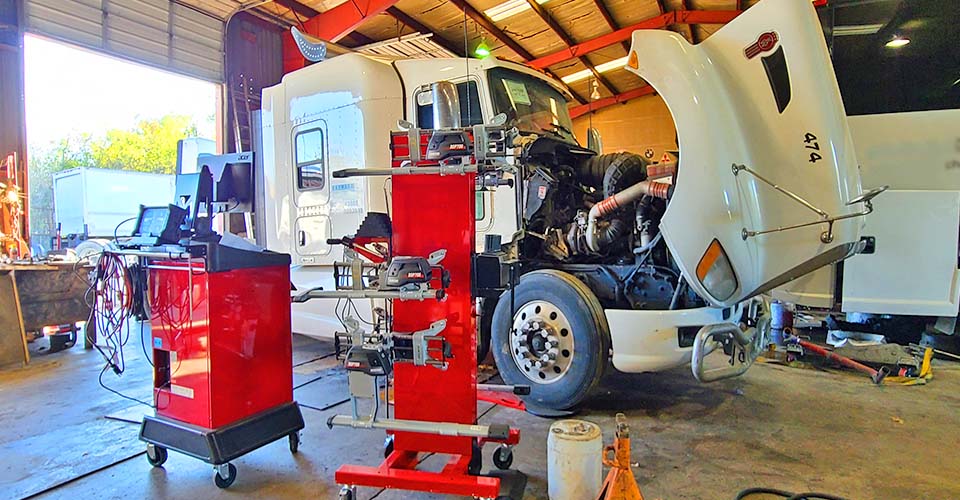
If your truck is pulling to one side or chewing through a steer tire, the alignment is one possible cause worn kingpins, suspension bushings or wheel bearings can produce the same symptoms. That's why we don't just put your truck on the rack and pull the specs green: we read the tire wear pattern, check the steering and suspension components for play first, then align on Hunter equipment and hand you the before/after printout.
Free alignment assessment: we measure your truck and show you the numbers before you approve any work. If the alignment is within spec and the problem is mechanical, you'll know exactly what it is in writing.
Salazar Semi-Truck Repair Inc. 2323 Chalk Hill Rd, Dallas, TX 75212 · Mon–Fri 7:00 AM–5:00 PM
A Steer Tire Costs $500+. Bad Alignment Can Destroy It in Weeks.
The math on alignment is brutal and simple. A premium steer tire runs $500 or more a pair over $1,000. A truck running with toe out of spec scrubs the tread sideways every mile; an aggressive misalignment can take a new steer tire from full tread to the wear bars in a matter of weeks, not years. Add the fuel penalty from increased rolling resistance and the accelerated wear on kingpins, tie rod ends and bushings, and an unchecked alignment quietly becomes one of the most expensive "small" problems on the truck.
And the tire bill is only the visible half. A steer tire that fails on I-20 isn't a $500 problem it's a load delivered late, a road-service call, and a day the truck doesn't earn. For an owner-operator, catching the wear pattern at the free assessment costs one shop visit on your schedule; ignoring it hands the schedule to the tire. Alignment is one of the few repairs where you get to choose when the downtime happens.
The alignment doesn't get more expensive over time. The tires and components it destroys do.
Signs Your Semi-Truck May Need an Alignment or Something Mechanical
Each of these symptoms can be associated with alignment, but also with worn steering or suspension components. The tire tells us where to look; inspection confirms the cause.
- Truck pulls to one side may indicate alignment, but also brake drag, tire pressure mismatch or suspension issues.
- Uneven or inside-edge steer tire wear can be associated with toe/camber out of spec, worn kingpins, or bushing play. The wear pattern narrows the diagnosis.
- Steering wheel off-center when driving straight often alignment, sometimes a shifted rear axle (thrust angle).
- Wandering or constant correction on the highway may indicate caster out of spec or play in the steering components.
- After a curb strike, pothole hit or collision alignment should always be measured, and components inspected for bent or damaged parts.
Alignment or Bad Kingpins? How We Tell the Difference
Direct answer: You can't align a truck with worn kingpins the play in the kingpin makes the alignment readings unstable and the correction won't hold. That's why kingpin inspection comes before alignment, not after.
Inside-edge steer tire wear is one of the most misdiagnosed symptoms in heavy-duty repair. Alignment out of spec and kingpin wear can both produce it. The difference shows up in inspection: with the steer axle lifted, measurable vertical and horizontal play at the wheel points to kingpins or wheel bearings; a tight front end with wear on the tires points to alignment. A shop that aligns without checking play first is charging you for a correction that won't last and the tire wear comes back.
Repair decision: If kingpins are worn, they're replaced first, then the truck is aligned. If the front end is tight, alignment alone corrects it. Either way, you get the measurement, not a guess. See our Suspension & Steering Repair service.
Alignment or Suspension Problem?
Direct answer: Broken or sagging springs, worn bushings and shifted axle positions change the truck's geometry alignment numbers will be off, but the cause is the suspension, and aligning without fixing it treats the symptom.
Ride height and spring condition get checked as part of our assessment. A truck sitting low on one side, or with a rear axle out of square (thrust angle), will dog-track and scrub tires no matter how many times the front end gets aligned. Repair decision: suspension corrections first, then final alignment one visit, one printout. See Semi-Truck Suspension Repair.
Do I Need an Alignment After Kingpin or Suspension Work?
Direct answer: Yes always. Replacing kingpins, tie rod ends, drag links, springs or bushings changes the steering geometry. Every front-end repair should end with an alignment, or the new parts start their life wearing your tires the same way the old ones did.
Should I Align Before or After Installing New Steer Tires?
Direct answer: Align first or in the same visit, alignment before the new tires touch the road.
Mounting new steer tires on a misaligned truck means the misalignment starts eating the new tread from mile one. If your current steers are showing uneven wear, the smart sequence is: diagnose the cause, correct it (alignment and/or mechanical repair), then install the new tires. That $1,000+ pair of steers deserves a truck that won't destroy them.
Our Alignment Diagnostic Process Step by Step
Finding why the truck wears tires beats pulling the specs green on a worn front end. Our process:
- Tire wear pattern reading inside/outside edge wear, feathering, cupping and diagonal scrub each point to different causes.
- Steering component play inspection kingpins, tie rod ends, drag link and steering gear checked for play.
- Wheel bearing check bearing play mimics kingpin wear and corrupts alignment readings.
- Suspension and ride height inspection springs, bushings, hangers and torque rods; a shifted axle shows up here.
- Tire pressure verification pressure mismatch alone can cause pull and must be ruled out before measuring.
- Hunter measurement all axles toe, camber and caster on the steer axle; thrust angle and scrub angle on the drives. The "before" printout is generated here.
- Correction adjustments made to your truck's OEM alignment specifications.
- "After" measurement and printout you receive the before/after readings in writing, with every angle documented.
- Road verification steering wheel centered, no pull, stable tracking.
If step 2, 3 or 4 finds worn components, we stop and show you before any alignment work because aligning a loose front end wastes your money.
Steer-Axle vs 3-Axle Alignment Which One Does Your Truck Need?
Direct answer: If the steering wheel is off-center or the truck dog-tracks (trailer visibly offset behind the tractor), the rear axles are part of the problem and a 3-axle alignment is the right call. Front-only alignment on a truck with a shifted drive axle corrects the symptom you feel and leaves the one that eats tires.
A 3-axle alignment squares the drive axles to the frame and to each other (thrust and scrub angle), then sets the steer axle geometry against that reference. Full detail: 3-Axle Alignment for Heavy Trucks.
Truck Brands We Align
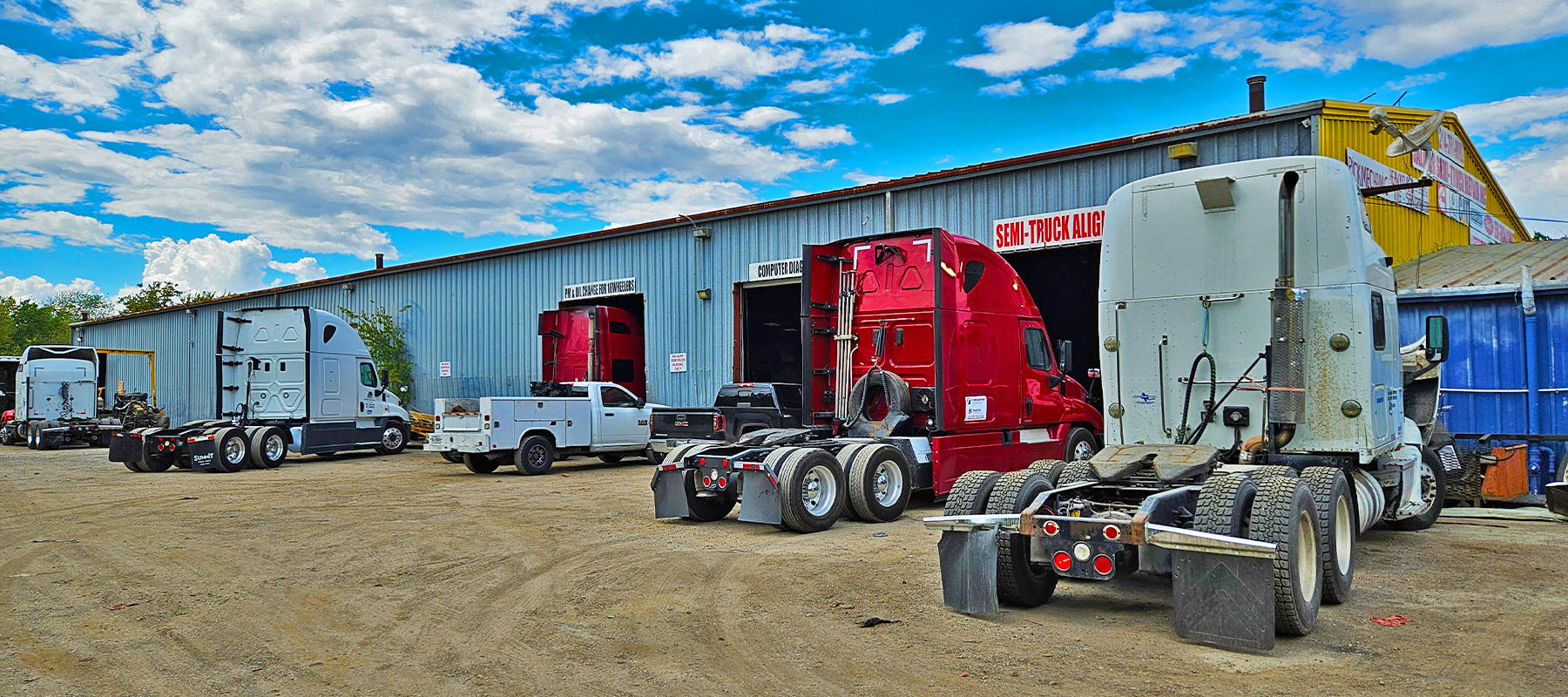
Freightliner, Peterbilt, Kenworth, Volvo, International, Mack and Western Star each aligned to its OEM specification sheet in the Hunter system, not to a generic "close enough" spec. Set-forward and set-back front axles, and trucks with aftermarket suspension modifications, are measured against the correct reference for their configuration. That includes the trucks we see most on the rack: Freightliner Cascadia, Peterbilt 579 and 389, Kenworth T680 and T880, Volvo VNL, International LT and Mack Anthem each with its own spec sheet, not a shared one.
For Drivers
Tell us what the truck does pulls, wanders, wheel off-center and what the tires look like. You don't need to know if it's alignment or kingpins. That's our job. The free assessment puts numbers on it before anyone touches a wrench.
For Owner-Operators
An alignment caught when the wear pattern first appears costs you an alignment. Caught two months later, it costs you an alignment plus a pair of steer tires. Our assessment is free precisely so the measurement never has to wait for the damage to justify it.
For Fleet Managers
Every alignment includes the before/after Hunter printout, unit number and mileage for your records. Repeated wear patterns across units same model, same route, same edge get flagged to you as a pattern, not billed to you as a series of coincidences. Fleet discounts available on scheduled alignment programs.
Semi-Truck Alignment FAQs
Can I keep driving with bad alignment?
The truck will drive, but every mile scrubs tread off the steer tires and loads the steering components unevenly. If the pull is strong enough that you're actively fighting the wheel, get it measured before the next long haul both for tire cost and for how the truck behaves in an emergency maneuver. This is a "this week" repair, not a "right now" tow unless a mechanical inspection finds significant play in the steering components.
How much does a semi-truck alignment cost?
The assessment that tells you what your truck actually needs is free, and you get a written estimate before any work begins. Cost depends on whether the truck needs a steer-axle alignment, a full 3-axle alignment, or mechanical repairs first if worn components are found, you'll see the measurements and approve the scope before anything is replaced.
How long does a 3-axle alignment take?
Most alignments are completed the same day. The exact time depends on the truck's condition: a tight front end aligns quickly, while a truck that needs worn components replaced first takes longer and we tell you the revised timeline before starting, not after.
What’s the difference between axle alignment and wheel alignment in semi-trucks?
Axle alignment squares the axles to each other and to the frame; wheel alignment sets toe, camber and caster at each wheel. A truck needs both references correct for stable tracking and even tire wear which is why 3-axle alignment exists as a service distinct from a front-end-only alignment.
Does bad alignment increase fuel consumption?
Yes misaligned wheels increase rolling resistance because the tires are being dragged slightly sideways instead of rolling true. The exact penalty depends on how far out of spec the truck is, but on a vehicle burning tens of thousands of dollars in fuel per year, even a small percentage is real money. The tire wear, however, is usually the larger and faster cost.
Do you align trucks after collisions or curb strikes?
Yes, and you should always measure after an impact even if the truck "feels fine." An impact can bend components or shift an axle in ways that show up first as tire wear weeks later. The "before" printout documents the truck's condition, which also matters for insurance claims.
Which Dallas-Fort Worth cities do you serve for semi-truck alignment?
We serve the entire Dallas–Fort Worth Metroplex from our shop at 2323 Chalk Hill Rd in Dallas regular customers come in from Fort Worth, Arlington, Irving, Garland, Mesquite, Grand Prairie, DeSoto, Lancaster, Hutchins and Wilmer, including owner-operators based at the BNSF and Union Pacific intermodal terminals.
Can alignment fix steering wheel vibration or shimmy?
Usually not by itself. Vibration at highway speed is more commonly associated with tire balance, a bent wheel, or worn steering components than with alignment angles. Alignment problems cause wear and pull; balance problems cause shake. Both get checked in the same free assessment, so you leave knowing which one your truck actually has instead of paying for an alignment that can't fix a balance problem.
How often should a semi-truck get an alignment?
There's no fixed mileage the tires set the schedule. Measure whenever a wear pattern appears, after any front-end repair, after an impact or curb strike, and before new steer tires go on. Fleets running scheduled alignment programs catch drift before it costs a tire, which is why we offer fleet rates on recurring alignment checks.
Get Your Truck Measured Today Free Alignment Assessment in Dallas
Don't buy new steer tires for a truck that's going to eat them. Don't let a shop align a loose front end. Get the numbers first.
🔧 Same-day service available call to check today's alignment availability
📍 2323 Chalk Hill Rd, Dallas, Texas · 📞 214-761-9082 · 🕐 Monday–Friday, 7:00 AM–5:00 PM
📞 Call Now 📍 Get DirectionsEFS, credit card, cash and check accepted